
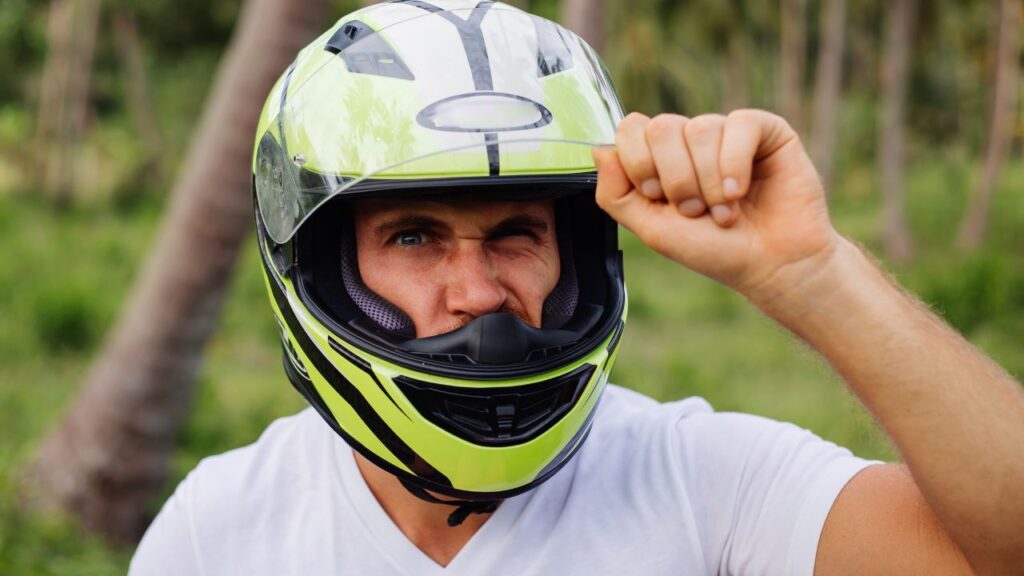
It’s the gritty backroad that turns to gravel, the forest trail that beckons, and the highway that leads to it all. This spirit of pure, unadulterated exploration demands a specific kind of gear, starting at the top—literally. Enter the dual sport helmet, the Swiss Army knife of head protection and the essential piece of equipment for the adventure motorcyclist. This comprehensive guide dives deep into what makes a dual sport helmet unique, its key features, and how to choose the perfect one for your next two-wheeled odyssey.
What is a Dual Sport Helmet?
A dual sport helmet, often interchangeable with the term “adventure helmet,” is a specialized hybrid designed to perform competently both on and off-road. It masterfully blends characteristics from its dedicated cousins: the street helmet and the motocross helmet.
Anatomy of a Dual Sport Helmet: Key Features Explained
Understanding the design elements of an adventure helmet is crucial to appreciating its value.
1. The Peak or Sun Visor: This is the most distinctive visual feature. The protruding peak isn’t just for style; it serves a critical function off-road by deflecting branches, roost from other riders, and, most importantly, shading your eyes from the sun and helping to keep rain off your goggles or visor. On the highway at high speeds, a well-designed peak will create minimal lift and buffeting.
2. Eye Port and Visor System: Dual sport helmets are designed for flexibility. They typically feature:
-
A Clear, Pinlock-Ready Visor: For street use, a wide, optically clear face shield provides excellent visibility. Most premium models are Pinlock-ready, allowing for an anti-fog insert—a lifesaver in cold or humid conditions.
-
Goggle Compatibility: The eye port is shaped and spacious enough to comfortably accommodate off-road goggles. The peak and quick-release visor mechanisms allow you to easily remove the face shield and switch to goggles for intense dirt sections, preventing dust and mud from getting on the inner side of a shield.
3. Ventilation Superiority:
Adventure riding is physically demanding. Dual sport helmets feature aggressive, multi-port ventilation systems—often with large chin bar intakes, forehead vents, and exhaust ports at the rear—that rival true motocross helmets. This massive airflow prevents fogging and keeps you cool during low-speed, high-exertion trail riding.
4. Chin Bar and Jaw Protection: Retaining the robust, integral chin bar of a street helmet, dual sport designs offer superior protection in a full-face impact compared to an open-face or modular helmet. The chin bar area is often elongated to provide more room for breathing and is a key intake point for the ventilation system.
5. Interior Comfort and Fit: Adventure trips mean long days in the saddle. Liners are typically plush, moisture-wicking, and often removable and washable. Fit is generally geared towards a more neutral, upright riding position, differing from the tucked-forward fit of a sportbike helmet.
6. Safety Certifications: Look for helmets that meet or exceed major safety standards like DOT (USA), ECE 22.06 (Europe), or Snell. The new ECE 22.06 standard is particularly rigorous, testing for rotational impact forces—a key advancement in helmet safety technology.
The Critical Debate: Dual Sport vs. Modular (Flip-Up) Helmets
Many adventure riders consider modular helmets for their versatility. While a good modular helmet offers the convenience of flipping up the chin bar for ventilation, conversation, or a quick drink, it has drawbacks for true dual-sport use.
-
Weight & Complexity: Modular mechanisms add weight and potential failure points.
-
Structural Integrity: Even when locked down, the jaw section is generally not as strong as that of a one-piece, full-face shell. For serious off-road falls, a dedicated dual sport or full-face helmet is widely considered safer.
Verdict: If your adventure riding leans 80% toward touring with occasional fire roads, a high-quality modular can work. If you genuinely plan to tackle technical off-road terrain, a purpose-built dual sport helmet is the safer, more functional choice.
How to Choose the Right Dual Sport Helmet: A Buyer’s Checklist
-
Fit is Paramount: This cannot be overstated. A helmet must be snug without causing pressure points. It should grip your cheeks and remain stable when you move your head. Always try before you buy, and consult manufacturer sizing charts.
-
Define Your Riding Ratio: Are you 60/40 street/dirt, or 40/60? Helmets like the Shoei Hornet X2 or Arai XD4 are exceptional but lean slightly more toward street refinement and quietness. The Bell MX-9 Adventure MIPS or LS2 Thunder are more off-road biased, with massive airflow and pronounced peaks.
-
Prioritize Key Features:
-
Anti-Fog Visor (Pinlock): Essential for any rider in variable climates.
-
Emergency Cheek Pad Release: Allows for safer, easier removal by medical personnel in case of an accident.
-
Sun Visor: Many models now include a convenient internal, drop-down sun visor—a hugely popular feature for changing light conditions without switching shields or goggles.
-
Weight: Lighter helmets reduce neck fatigue on long, bumpy days.
-
-
Consider Your Communication Needs: If you use a Bluetooth communication system, ensure the helmet has pre-cut speaker pockets and accessible recesses for your preferred brand (Cardo, Sena, etc.).
Top-Tier Technology: MIPS and Rotational Impact Protection
The latest advancement in helmet safety is addressing rotational motion during an impact. Systems like MIPS (Multi-directional Impact Protection System) incorporate a low-friction layer inside the helmet that allows a slight rotational movement upon impact.Many leading adventure helmets now offer MIPS or similar proprietary systems as a key safety differentiator.
Maintenance and Care: Protecting Your Investment
To ensure your helmet performs when it counts:
-
Clean Regularly: Use mild soap and water on the liner and shell. Never use harsh chemicals on the visor.
-
Inspect the Visor and Seal: Check for scratches and ensure the sealing mechanism is intact to prevent water ingress.
-
Store Properly: Keep it in a cool, dry place away from direct sunlight and chemicals (like fuel).
-
Know Its Lifespan: The general rule is to replace your helmet every 5-7 years from the production date (check the date stamp inside) or immediately after any significant impact, even if no damage is visible.
Conclusion: Your Gateway to Adventure
Dual Sport Helmets is more than just protective gear; it’s a symbol of a rider’s philosophy—a commitment to freedom, versatility, and the uncharted path.By carefully selecting a helmet that fits your head, your bike, and your riding style, you’re not just buying a product; you’re investing in countless journeys ahead. You’re equipping yourself to ride with confidence, whether you’re navigating urban sprawl, carving mountain passes, or exploring a remote desert trail.