
From the roar of a football stadium to the quiet intensity of a tennis court, the humble sport ball is the silent, bouncing heart of global athletic competition. More than just spherical objects, these engineered marvels are the result of centuries of innovation, precise physics, and cultural significance. This comprehensive guide explores the fascinating world of sport balls, detailing their history, design, and the cutting-edge technology that powers modern play.
The Historical Journey: From Animal Bladders to Advanced Polymers
The story of the sport balls is as old as civilization itself. Ancient cultures used a variety of natural materials for ball games. Mesoamerican cultures played ritual ballgames with solid rubber balls, a remarkable feat for 1600 BCE. In medieval Europe, inflated animal bladders, often from pigs or cows, were encased in leather to create early versions of footballs and rugby balls. These balls were irregular, prone to waterlogging, and difficult to control.
The 19th century marked a turning point with Charles Goodyear’s vulcanization of rubber in 1836. This allowed for the creation of the first standardized rubber bladders and, later, rubber basketballs and tennis balls. The invention of butyl rubber bladders in the mid-20th century was another leap forward, dramatically improving air retention. Today, sport balls are feats of materials science, utilizing synthetic leathers, polyurethane composites, advanced thermoplastics, and textured surfaces optimized for grip, aerodynamics, and durability.
Anatomy of Performance: Deconstructing Design
Every sport ball is a carefully balanced system designed for specific athletic demands.
The Core: This is the engine of the ball. In inflated balls (soccer, basketball, football), a latex or butyl rubber bladder holds the air, affecting bounce and feel. Solid-core balls (baseballs, golf balls, cricket balls) use layered materials like cork, rubber, and twine to create precise weight and rebound characteristics. A golf ball’s dimpled core, for instance, is a masterpiece of aerodynamic engineering.
The Casing/Panel Construction: The outer surface dictates control, feel, and aerodynamics. Traditional 32-panel soccer balls provide a near-perfect sphere, while newer designs like the 2006 Teamgeist (14 panels) and the 2010 Jabulani (8 panels) sought smoother flight. Basketballs feature a pebbled leather or composite cover for grip, and American footballs maintain their iconic pointed shape with four panels of leather or tacky composite for throwing accuracy.
A Deep Dive into Iconic Ball Types
Soccer Ball (Football)
The world’s most recognized sports icon. Modern soccer balls are size 5 (circumference 27-28 inches) for adults, constructed from polyurethane (PU) or thermoplastic polyurethane (TPU) for a soft touch and durability. The black-and-white pentagon/hexagon pattern, introduced with the Adidas Telstar in 1970, was designed for TV visibility. The latest models feature textured surfaces and micro-texturing to stabilize flight and aid player swerve.
Basketball
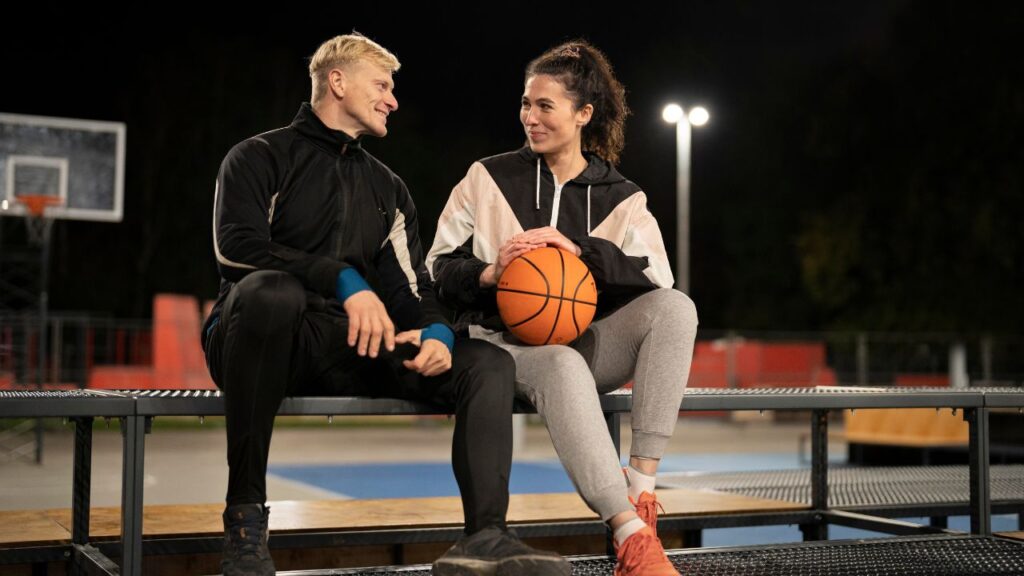
An orange sphere defined by its bounce. Size 7 (29.5-inch circumference) is standard for men. The surface is traditionally full-grain leather (for indoor) or rubber/composite (outdoor), with approximately 35,000 raised pebbles for grip. The internal carcass consists of nylon or polyester threads wound around a butyl rubber bladder, creating the signature rebound.
American Football
A prolate spheroid designed for the spiral throw. It measures about 11 inches long with a 28-inch circumference at the center. Made of cowhide leather or tacky synthetic materials, its shape and pointed ends allow for aerodynamic passing and unpredictable bounces, adding to the game’s chaos.
Tennis Ball
Felt-covered and pressurised. The core is hollow rubber, pressurized with air or nitrogen to about 12 psi above atmospheric pressure. The fuzzy nylon/wool felt, typically optic yellow for visibility, slows the ball and creates spin effects. Pressureless training balls use a thicker rubber wall for longer life.
Baseball
A masterpiece of traditional craftsmanship. A cork and rubber “pill” core is wrapped tightly in wool yarn (up to a mile per ball), then coated with rubber cement and hand-stitched with 108 red cotton stitches. These raised seams are critical for a pitcher’s grip and the ball’s aerodynamic behavior.
The Science of Flight and Bounce: Physics in Play
A sport ball’s behavior is governed by fundamental physics.
-
Aerodynamics & Drag: A ball’s surface texture and shape disrupt air flow. A soccer ball’s panels, a golf ball’s dimples, and a baseball’s stitches all create turbulence that reduces drag (air resistance) at high speeds, allowing for longer, more stable flight. The Magnus Effect explains how spin creates lift or dip; a topspin tennis ball drops sharply, while a soccer ball with side-swerve bends around a wall.
-
Coefficient of Restitution (COR): This measures bounce efficiency—the ratio of speed after impact to speed before impact. A tennis ball has a high COR on grass, while a baseball has a much lower one. Regulations often strictly define COR to ensure fair play.
-
Energy Transfer: When a bat strikes a baseball or a foot kicks a soccer ball, the collision is never perfectly efficient. Energy is lost to sound, heat, and deformation. Modern materials aim to maximize energy transfer for power and speed.
Innovation and Technology: The Future of the Game
The quest for perfection never stops.
-
Smart Technology: Embedded microchips and sensors (like in Adidas’s miCoach soccer ball or the Wilson X Connected football) track speed, spin, trajectory, and strike point, providing real-time data for player training and analysis.
-
Sustainable Materials: Brands are pioneering eco-friendly balls made from recycled plastics, organic cotton, and sustainable rubber. The 2020 UEFA European Championship match ball used recycled polyester.
-
Advanced Manufacturing: 3D printing allows for rapid prototyping of new panel shapes and internal structures. Computational Fluid Dynamics (CFD) software simulates airflow around digital models to optimize design before a single physical prototype is made.
-
Enhanced Durability & Performance: Water-resistant coatings, abrasion-resistant composites, and improved bladder designs extend ball life and maintain consistent performance in all conditions.
Choosing the Right Ball: A Consumer’s Guide
Selecting a ball isn’t one-size-fits-all. Consider:
-
Skill Level & Age: Beginners benefit from durable, cost-effective synthetic or rubber balls. Pros and advanced players require high-performance leather or composite models for superior touch and control. Use appropriately sized balls for youth players (e.g., size 4 soccer ball for U-12).
-
Playing Surface: Indoor balls are softer and often non-marking. Outdoor balls use tougher materials to resist asphalt and concrete. Match balls are designed for natural grass.
-
Official Specifications: For league play, ensure the ball meets governing body standards (FIFA PRO, NBA Official, ITF Approved).
-
Feel and Preference: Ultimately, the connection between athlete and equipment is personal. The right weight, grip, and response are subjective.
More Than an Object: Cultural Icons
Sport balls transcend their functional role. They are symbols of global unity (the soccer ball), national pastimes (the baseball), and local identity. The design of a new tournament ball is a major event. Stained, weathered balls become cherished relics of personal achievement and community games. They are tools of diplomacy, education, and social change, promoting health, teamwork, and fair play across the globe.
Conclusion: The Unseen Engine of Sport
From the hand-stitched seams of a baseball to the thermally bonded panels of a Champions League match ball, sport balls are a perfect fusion of tradition and radical innovation.As technology advances, the core purpose remains: to be a reliable, consistent partner in the pursuit of athletic excellence, human connection, and simple joy. The next time you watch a game or pick up a ball, take a moment to appreciate the incredible engineering, history, and science you’re holding—the silent, bouncing heart of sport.