
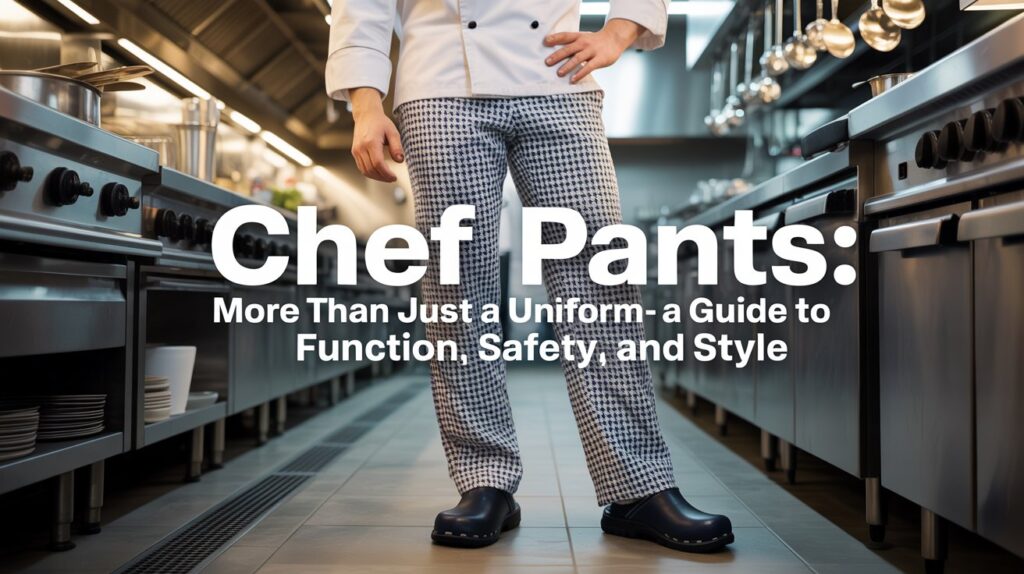
The classic white jacket and checkered chef pant instantly spring to mind when you think of a chef. However, have you ever pondered why this particular style of dress became the norm? Chef pants are an essential piece of engineering made for performance, comfort, and safety in one of the most demanding work situations; they are by no means just a fashion statement. This comprehensive guide delves deeply into the world of chef pants, examining their background, key characteristics, and how to pick the ideal pair to take over your kitchen shift.
Why Do Chefs Wear Those Pants? The History and Function
Chef pants’ traditional, frequently checkered design has a very useful function: it easily conceals stains. In a professional kitchen, spills of oils, sauces, and food particles are inevitable. Throughout an extended, disorganized shift, a busy pattern or a dark hue like black can keep one looking professional. Comfort and safety are the main priorities of the loose, baggy fit, which is typically secured with a drawstring.
Mobility: When bending, stooping, or hurrying between stations, the ample cut permits unhindered mobility.
Ventilation: Staying cool around hot stoves and ovens requires air circulation, which is encouraged by the loose fabric.
Safety: Loose-fitting chef pants are less likely to adhere to the skin than tight ones in the case of a hot liquid spill.
Key Features to Look for in Quality Chef Pants
- There are differences among chef pants. Keep an eye out for these crucial characteristics when purchasing your next pair:
1. Sturdiness and Fabric
Your first concern is the material.
A timeless option that provides comfort and breathability is cotton poplin or twill. Despite its softness, it can wrinkle easily.
Blends of poly-cotton are the industry standard for a reason. Blends combine the comfort of cotton with the ease of care, wrinkle resistance, and durability of polyester. If you want the best balance, look for a 65/35 poly-cotton blend.
Stretch Fabrics: Modern chef pants often incorporate a small percentage of spandex or elastane (e.g., 98% cotton, 2% spandex). This adds incredible flexibility and comfort without sacrificing the classic look.
2. Clever Design Components
A diamond-shaped piece of fabric sewed into the crotch seam is called a gusseted crotch. A need for any busy cook, it increases range of motion, avoids tearing, and reinforces a high-stress area.
Several Pockets: Seek out safe, roomy pockets. A cell phone pocket is a useful contemporary accessory that keeps your gadget secure and prevents it from coming out when you stoop.
Belt loops provide a more conventional choice, yet drawstrings guarantee a secure and adjustable fit. Both are present in many fine chef pants.
3. Pattern and Style
As important as function is, style is also important.
Classic Check: The classic check or houndstooth design in black and white is always a polished option.
Solid Colors: Because of their exceptional stain-hiding capabilities and sleek, contemporary style, black and navy chef pants are incredibly popular.
Modern Prints: The market for chef pants that showcase individual flair is expanding, with designs ranging from delicate stripes to striking patterns with a culinary theme.
A Sizing Guide to Help You Find the Ideal Fit
For comfort and safety, a good fit is essential.
Waist: Determine your natural waist circumference. Usually, chef pants are made to fit at the actual waist rather than the hips.
Measure from your crotch to your ankle bone to determine your inseam. Keep in mind that the pants will be worn with kitchen shoes, so take the height of the shoes into account.
Fit: They ought to feel spacious without being overly loose. There should be no limitations on your ability to lunge and squat.
Caring for Your Chef Pants: Make Them Last
To maximize the return on your investment:
Pre-treat Stains: Use a pre-wash treatment or a little amount of dish soap to remove food and oil stains.
Use a color-safe bleach for whites and a regular detergent for darks when washing in warm water.
Tumble Dry Low: Excessive heat can shrink and harm elastic. To prevent wrinkles, remove them as soon as possible.
Final Thought: An Essential Tool for the Trade
Like your favorite knife, your chef pants are an essential part of your toolkit. These are well-made clothes that shield you, give you the freedom to move, and support you in keeping up a polished appearance under duress. You can select a pair that not only looks the part but also actively assists you in performing it by being aware of the elements that are important, such as gusseted crotches and fabric blends.